A properly built driveway will go through a Norfolk winter without complaint. Most winter damage isn't caused by the cold itself — it's caused by water sitting where it shouldn't, and by what people reach for when the drive gets icy.
Freeze and thaw is the real mechanism
Water expands by roughly a tenth when it freezes. Get water into a crack, a loose joint or a porous patch, freeze it overnight and thaw it by lunchtime, and you have a small hydraulic jack working away at the surface — every night, all winter.
That's why a hairline crack in November is a real one by March, and why standing water is worse news than low temperature. It's also why drainage and the sub-base matter more than anything you can do with a bag of salt: a surface laid on a proper compacted base, with water running off it, has nothing to work on.
Salt: what it does, surface by surface
Rock salt works by lowering the freezing point of water. It's effective, cheap, and harder on your driveway than most people realise.
Block paving and concrete: salt is at its most damaging here. It draws moisture in, accelerates freeze–thaw at the surface, and over several winters can leave block faces flaking or pitted. It also washes the jointing sand out faster.
Tarmac: salt won't dissolve tarmac, but the brine it creates gets into any crack or open patch and the freeze–thaw cycle does the rest. Older or already-tired tarmac suffers most.
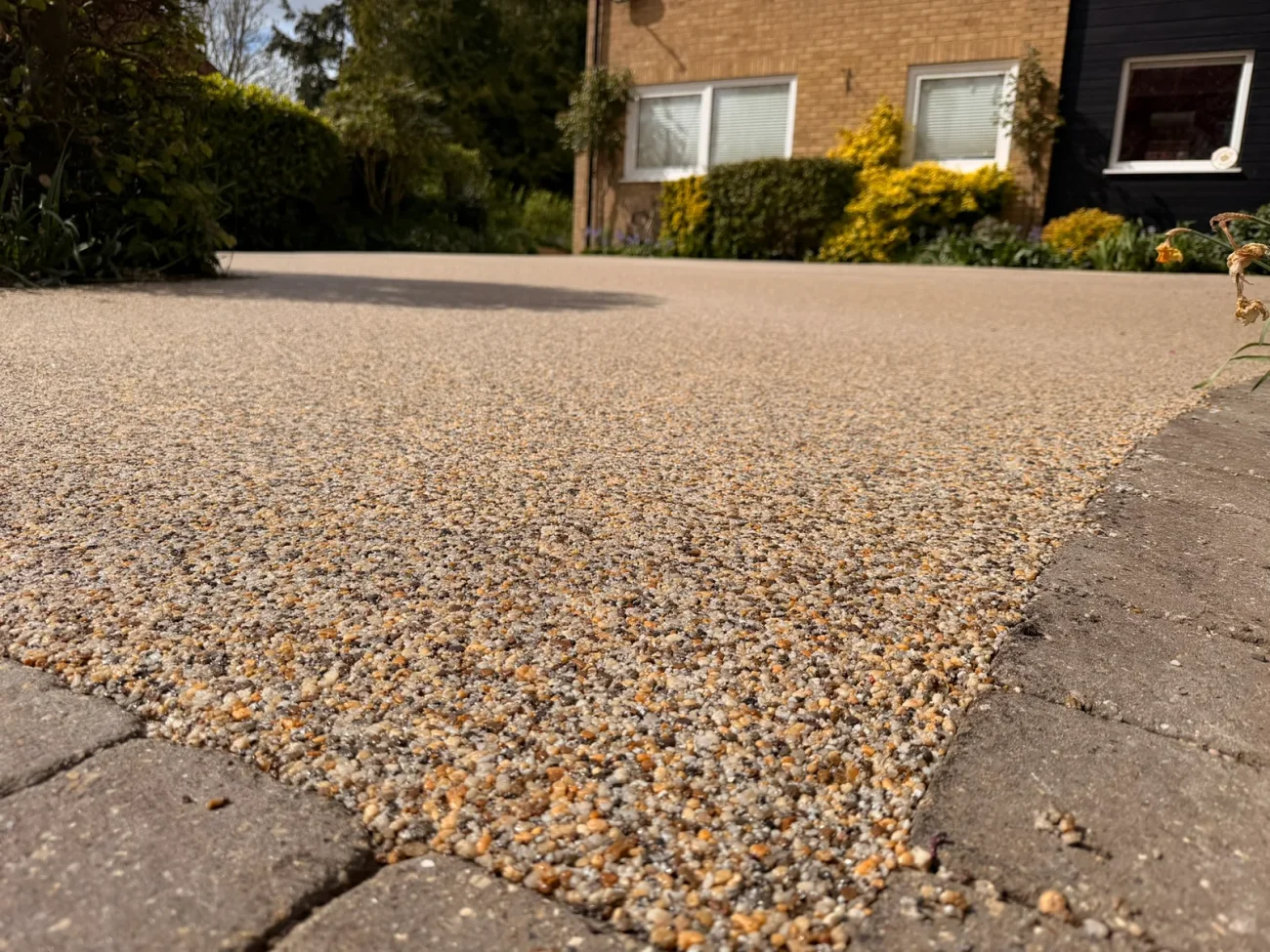
Resin bound: the most tolerant of the four. It's permeable, so water drains through rather than sitting on top, and the cured resin isn't bothered by salt. It's still worth sweeping residue off rather than letting it build up.
Gravel and tar & chip: largely unbothered. The grip is in the texture, so they're usually the least slippery surfaces you can have in the first place.
What to use instead
Grit or sharp sand gives grip without the chemistry — the best all-round choice for block paving and concrete. If you do use salt, use far less than you think: a light scatter works, a thick layer just sits there. Never use warm or hot water to clear ice; it refreezes into a sheet and you've made it worse.
Clearing snow without damaging the surface
Use a plastic or rubber-edged shovel, not a steel one. A metal blade dragged across resin, tarmac or block paving will scar it, and on tar & chip it can pull the dressing stone loose.
Clear while the snow is fresh, before it's walked and driven into compacted ice. Push rather than scrape, leave a thin layer rather than chasing the surface, and put the grit down once you're finished rather than before.
Watch for standing water
If you've ever noticed a puddle that lingers for a day after rain, winter is when it matters. That spot will freeze first, stay frozen longest, and work hardest at whatever it's sitting on.
Sometimes the cause is simply a blocked gully — a two-minute fix. Sometimes it's a dip that's settled, which usually means the base underneath wasn't right. Either way it's worth knowing which, and worth sorting before it becomes the place your drive starts to break up.
A note on moss in winter
Shaded sections stay damp for weeks on end at this time of year, and wet moss on a slope is genuinely dangerous underfoot. A sweep and a wash on a milder day is worth doing — and if there's a spot that's permanently green, it's usually telling you something about how water drains there.
If it's already broken up
Potholes, crumbling edges, cracks wide enough to put a coin in — these will get worse every freeze between now and spring. We can usually patch a surface through winter to hold it safely until conditions are right for a proper repair or resurface. Give us a ring and we'll tell you honestly which of the two you're looking at.