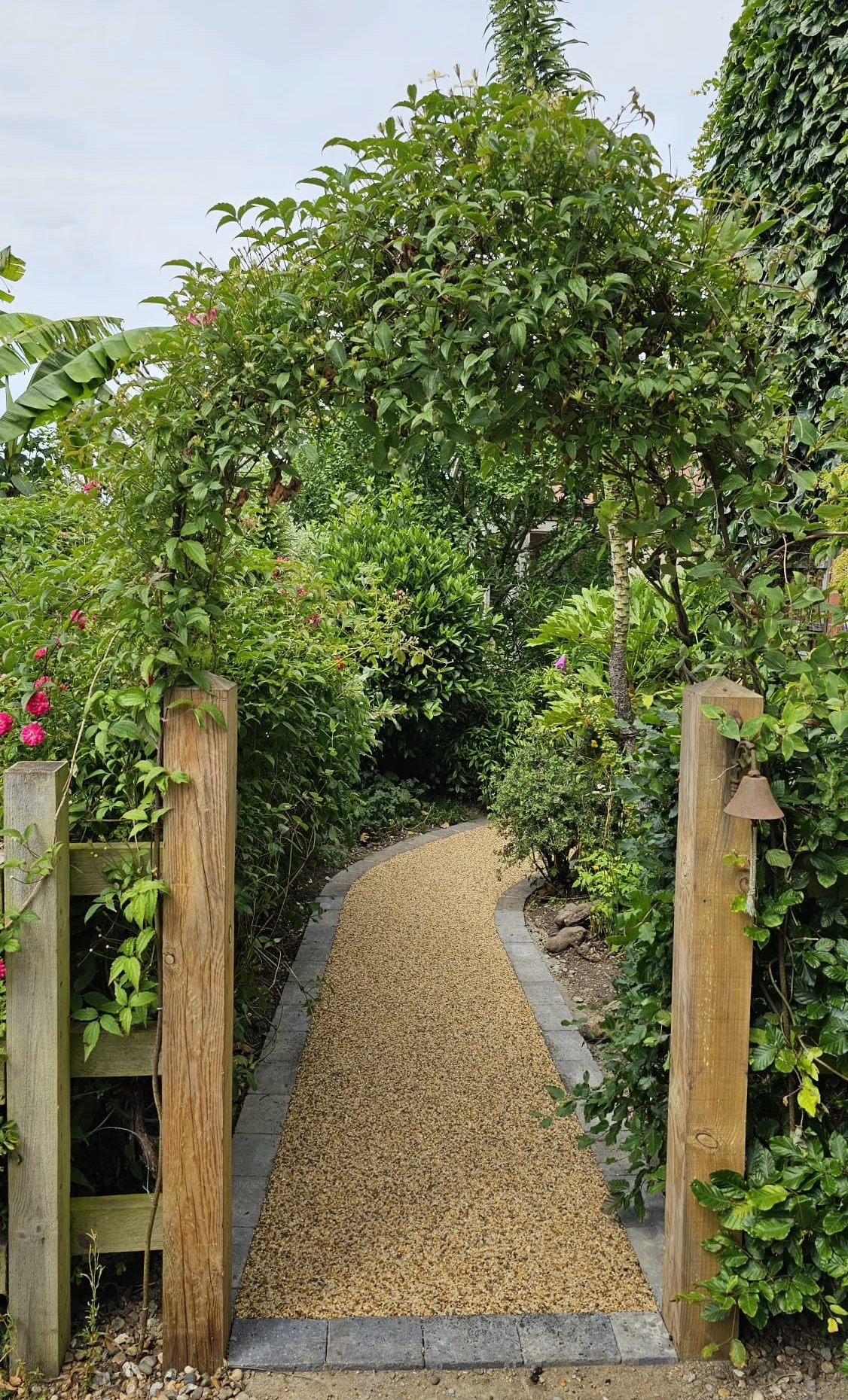
Colour is usually the hardest part of the decision — it's the thing you'll look at every day. Here's a straightforward way to land on a shade that suits your house and still looks right years down the line.
Start with the house
A driveway tends to look best when it works with the building rather than against it. Look at the tones in your brickwork, render or stone and choose a blend that sits comfortably alongside them. Red brick usually suits buff, gold and earthy tones; grey render and flint work well with silvers, slates and cooler greys. The aim is to complement, not to match exactly.
Light and setting
A colour reads differently in a shaded courtyard than on an open plot in full sun. Lighter blends make a space feel bigger and brighter; darker ones feel more grounded and hide day-to-day marks better. It's worth picturing the drive on a grey day as well as a sunny one.
Contrast or blend
You can let the drive blend into the plot, or frame it with a contrasting border or block edging. It's a small detail, but a border gives the surface a defined, finished edge — worth thinking about early on.
What dates fastest
Bold or of-the-moment colours are the ones people tire of soonest. For a drive that still looks right in ten years, natural greys, buffs and mixed blends are the safer choices — you can always add character with borders and detailing.
Practicality
Very light surfaces look great but show tyre marks and leaf stains sooner; very dark ones hide dirt but can look heavy against a pale house. A mixed blend is usually the best of both — it disguises everyday marks while still looking crisp.
See a sample first
Colours shift a fair bit with light and scale, so it's worth seeing a physical sample rather than choosing from a screen or a small brochure square. We'll bring samples to the site visit so you can see them against your house before you decide.