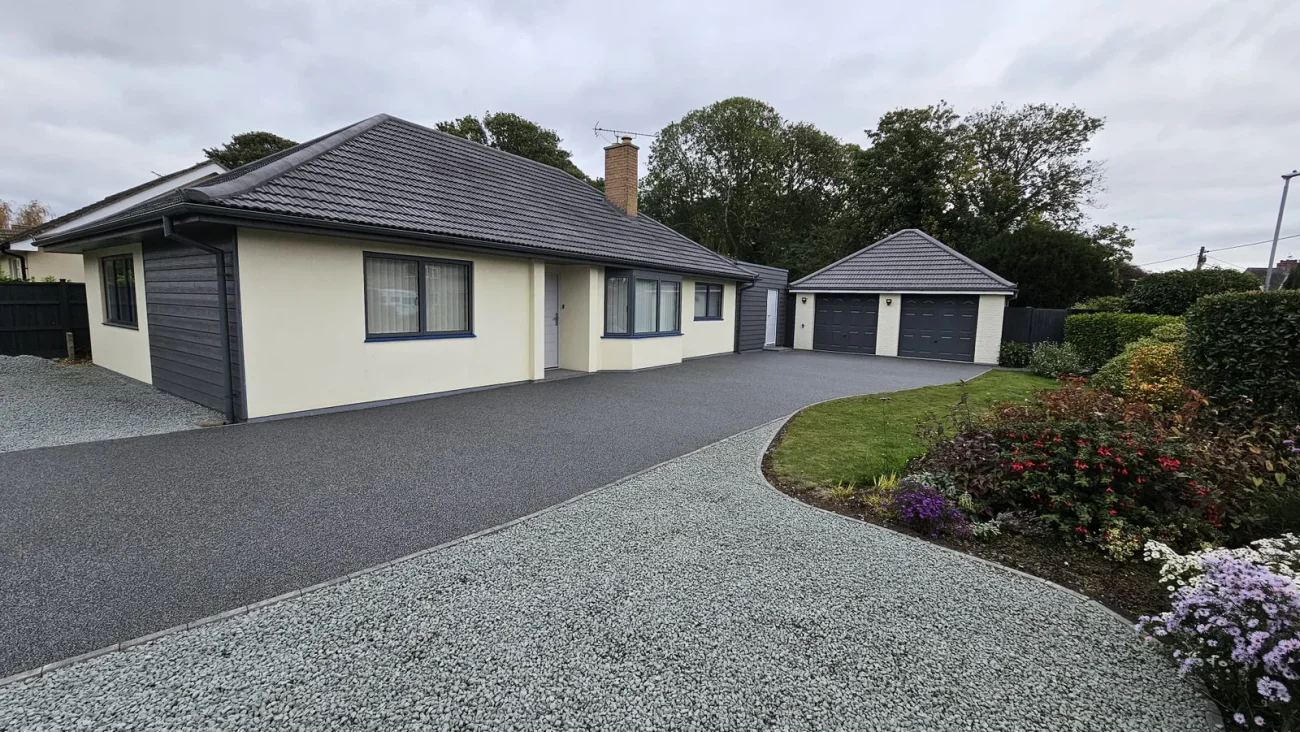
They sound almost the same and look similar in a brochure, but resin bound and resin bonded are laid differently, behave differently and suit different jobs. Here's how to tell them apart, and which tends to be the right choice.
The short version
Resin bound is smooth and permeable — the stone is mixed all the way through the resin and trowelled flat, so water drains through it. Resin bonded is textured — resin is applied to the surface and stone is scattered on top, so it looks like loose gravel but water runs off rather than through.
Resin bound — smooth & permeable
Aggregate is mixed with a clear, UV-stable resin and trowelled onto a prepared base to a seamless, flat finish, usually around 15–18mm deep. Because every stone is coated and there are small voids between them, water drains straight through to the base below.
That permeability is the main advantage: it's SuDS-friendly and usually keeps you inside permitted development without separate drainage. The surface is smooth enough for prams, wheelchairs and bikes, there's no loose stone underfoot, and it holds its colour for years.
Resin bonded — textured & high-grip
Here the resin goes down first and the stone is scattered over the top while it's still wet, so only the base of each stone is fixed. The result is a rougher, gravelled texture with good grip, which makes it a common choice for slopes, ramps and steps.
The trade-off is that it isn't permeable — water runs off, so it needs proper falls and drainage. You may also see a little loose stone in the first few weeks as it settles.
Which should you choose?
For most driveways, resin bound is the usual answer — permeable, smooth and low-maintenance. Resin bonded makes more sense where grip is the priority: a steep drive, a ramp, or a poolside where a rougher surface helps.
Cost & maintenance
The two are in a similar price bracket. Bound often costs a little more per square metre, but because it drains itself it can save on drainage works, so the finished job often evens out. Both are low-maintenance — an occasional rinse or gentle wash keeps them looking good.
In short
Bound for a clean, contemporary, free-draining drive; bonded where you need maximum grip and have drainage sorted. If you're unsure which suits your ground, that's what the site visit is for.