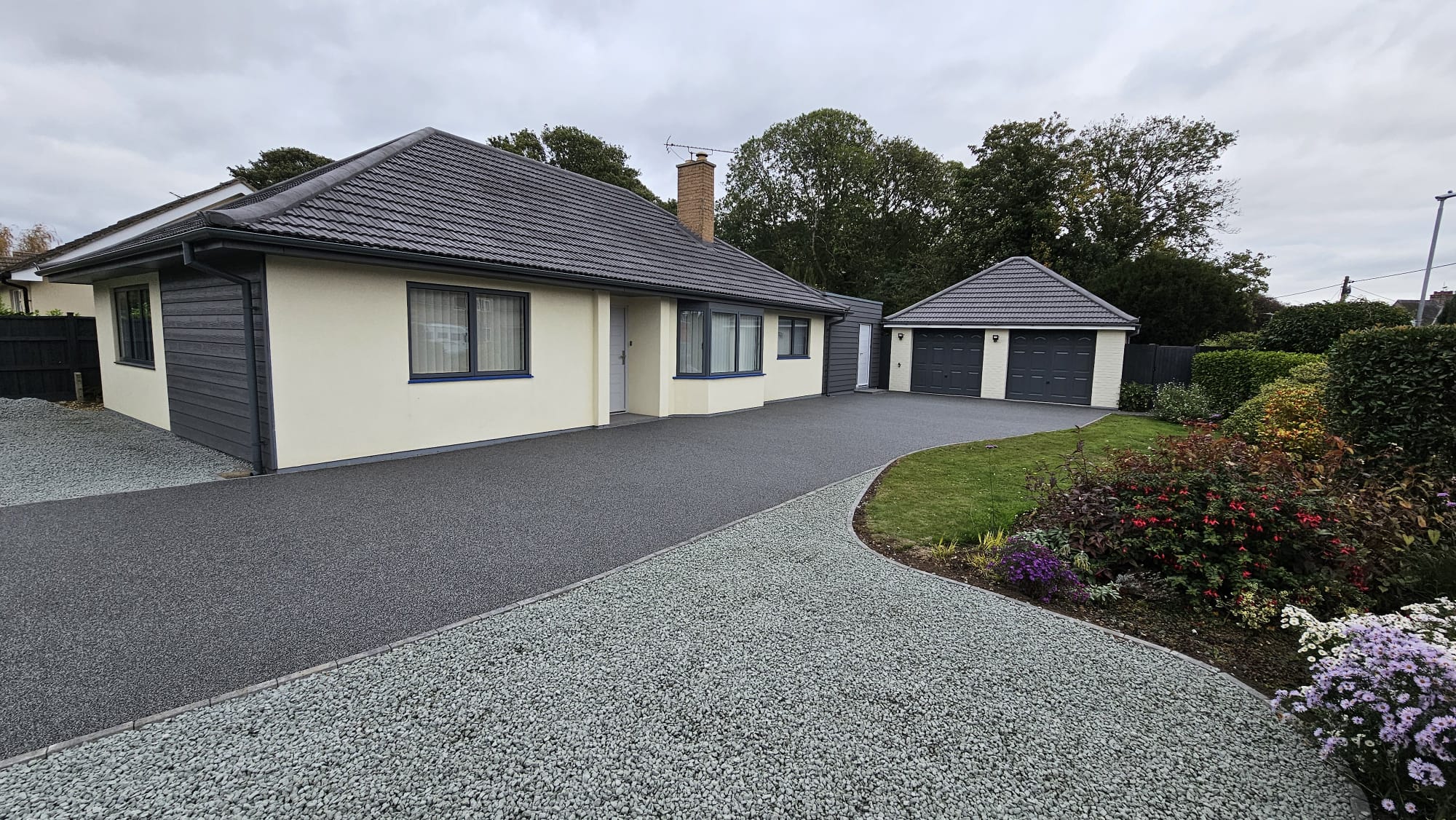
Which driveway surface is right for your home?
If you've been researching a new driveway, you've almost certainly come across three names: resin bound, block paving, and tarmac. Each has a vocal set of advocates — and each comes with legitimate advantages. But the right answer depends on your home, your budget, and what you actually want from your driveway.
After four generations of installing all three surfaces across Norfolk, we've seen exactly where each one excels — and where it falls short. Here's our unsponsored, no-jargon breakdown.
At a Glance: Quick Comparison
| Resin Bound | Block Paving | Tarmac | |
|---|---|---|---|
| Cost (installed) | £60–90/m² | £45–70/m² | £25–40/m² |
| Lifespan | 15–25 years | 25–30+ years | 15–25 years |
| SuDS Compliant | Yes | Only if permeable | Only if permeable tarmac |
| Maintenance | Low | Medium–High | Low |
| Appearance | Premium, decorative | Traditional, versatile | Functional, clean |
| Repairability | Moderate | Excellent | Good |
Resin Bound Driveways
What it is
Resin bound surfacing bonds natural aggregate — stone, gravel, or recycled glass — in a UV-stable clear polyurethane resin. The mixture is applied over a prepared tarmac base and trowelled flat by hand. The finished surface is seamless, smooth, and fully permeable.
Appearance
Resin bound is the most visually impressive driveway surface available. With dozens of aggregate colours — from silver grey marble to golden harvest — it suits both contemporary homes and period properties. The texture has a natural, tactile quality that neither block paving nor tarmac can replicate.
Drainage and SuDS compliance
This is resin's clearest advantage. When installed over a permeable tarmac base, resin bound driveways are fully SuDS-compliant — meeting the government's sustainable drainage requirements for front gardens without needing planning permission. Water passes through the surface and into the sub-base, reducing runoff and flood risk.
Durability and lifespan
A properly installed resin bound driveway will last 15–25 years. The key word is "properly" — resin bound is sensitive to installation quality. A poorly mixed batch, inadequate trowelling, or insufficient sub-base preparation can all lead to early failure. With an experienced installer, it's one of the most durable surfaces available.
Cost in Norfolk
Expect to pay £60–90 per square metre for supply and installation across North Norfolk, including sub-base preparation. Larger driveways attract lower per-m² costs. Any quote below £50/m² is a red flag — it typically means compromised preparation or low-quality resin.
Maintenance
Resin bound is low-maintenance. An occasional brush to clear debris and an annual power wash is all it needs. Weeds very rarely establish in the surface itself.
Best suited to
- Modern and contemporary homes
- Front gardens subject to SuDS planning rules
- Homeowners wanting premium kerb appeal
- Those wanting a clean, low-maintenance surface
Block Paving Driveways
What it is
Block paving consists of individual concrete or clay bricks, laid on a bed of sharp sand over a prepared sub-base. The joints between blocks are filled with kiln-dried sand, which locks them in place. There are hundreds of block sizes, colours, and laying patterns to choose from.
Appearance
Block paving has a timeless, structured look that suits traditional homes particularly well. Herringbone, basketweave, and stretcher bond patterns each create a different character. Clay blocks have a natural warmth that concrete blocks can't quite match, though they cost more.
Drainage and SuDS compliance
Standard block paving is not SuDS compliant — sand-filled joints don't provide adequate permeability for planning purposes. However, permeable block paving with aggregate-filled joints and a permeable sub-base is fully compliant. We recommend permeable installation for all front gardens.
Durability and lifespan
Block paving is the longest-lasting driveway surface when installed correctly — 25–30+ years is achievable. Its greatest advantage is repairability: if a section is damaged by a utility company or tree roots, individual blocks can be lifted, the sub-base repaired, and the blocks relaid. No patch repairs visible.
Cost in Norfolk
Expect £45–70/m² for supply and installation, depending on block choice. Clay pavers sit at the higher end; concrete pavers at the lower end. The laying pattern affects labour costs — herringbone takes longer than stretcher bond.
Maintenance
Block paving requires more maintenance than resin or tarmac. Kiln-dried sand needs topping up every few years; weeds establish in the joints if left untreated; re-pointing may be needed after 8–12 years. Sealing the surface after installation significantly reduces long-term maintenance.
Best suited to
- Period, traditional, and Victorian homes
- Driveways where long-term repairability matters
- Larger drives where pattern and character are important
- Homeowners planning to stay long-term
Tarmac Driveways
What it is
Tarmac (bituminous macadam) is a mixture of bitumen binder and aggregate, laid hot and compacted by a roller. It's the same material used for roads — which is why it's so proven for driveway use. Standard tarmac can also be finished with decorative chippings rolled into the surface (tar & chip).
Appearance
Standard tarmac has a clean, uniform black finish — functional rather than decorative, but sharp when freshly laid. Over time, weathering turns it dark grey, which many homeowners prefer. Adding a coloured chipping finish transforms the surface into something considerably more characterful.
Drainage and SuDS compliance
Standard tarmac is not permeable. For SuDS compliance on front gardens, you need permeable (open-graded) tarmac, which has a more open aggregate structure. This costs a little more but removes any planning concerns. Alternatively, a drainage channel connected to a soakaway can satisfy the requirement.
Durability and lifespan
Tarmac is extremely durable — 15–25 years is typical, and well-maintained tarmac can exceed this significantly. Unlike resin, it can be re-coated: a thin layer of new binder and aggregate can extend its life by another decade. Patch repairs are straightforward, though visible.
Cost in Norfolk
Tarmac is the most cost-effective of the three: £25–40/m² for supply and installation, including sub-base preparation. This makes it the go-to choice for large driveways where resin or block paving would become prohibitively expensive.
Maintenance
Tarmac is low-maintenance. Some contractors recommend a bitumen-based seal coat after 5–7 years to restore the surface and prevent oxidation cracking. Weed growth is minimal as there are no joints for roots to penetrate.
Best suited to
- Large driveways where cost per m² matters
- Rural properties and farm entrances
- Homeowners who prioritise durability over aesthetics
- Rear driveways and parking areas
Which surface should you choose?
After working through hundreds of driveways across Norfolk, here's our honest guidance:
Choose resin bound if you want the best-looking driveway possible, your front garden is subject to SuDS rules, and you're prepared to invest for a finish that genuinely stands out. It's our most popular surface for a reason.
Choose block paving if your home is traditional or period in character, you want a driveway that appreciates in value over time, or repairability matters to you — utility works are always a possibility.
Choose tarmac if your driveway is large, budget is a key factor, or you want the most proven surface with the lowest cost per m². Many Norfolk homes have had the same tarmac driveway for 25 years with minimal work.
The honest truth? All three are good choices when installed correctly. The quality of the installation matters far more than which surface you pick. A perfectly installed tarmac driveway will outlast a poorly installed resin one every time.
Ready to get a quote from Norfolk's most experienced driveway specialists?
Get a Free Quote